

7 Reasons Tinnitus won't stop
For readers over 45 with chronic ringing
7 Reasons Your Tinnitus Won't Stop — And What Finally Quiets It
From a nurse who spent 32 years watching tinnitus patients walk out of exam rooms with the exact same ringing they walked in with.
5-minute read · No affiliate links · Written by someone who watched three decades of the same failure

If you're reading this, chances are you've been through the appointment. The audiogram came back clean. The MRI came back clean. The doctor said one of three things: "it's stress," or "you'll get used to it," or slid a $9,000 hearing aid quote across the table. And you walked out with the exact same ringing you walked in with.
I've watched that happen for three decades. I'm a nurse. I've been in the room for hundreds of those conversations. And the honest thing that we don't say out loud — because it's outside our billable scope — is that the ringing isn't happening in your ears. It never was.
The mechanism is upstream. It's in a filter in your brain that most doctors weren't trained to look at, because nobody was billing for it during their residency. Once you understand what that filter is and what it needs, the whole picture changes.
Here are the seven reasons your tinnitus won't stop — and what actually quiets it.
Reason 01
Your ears aren't broken. Your hearing test proves it.
Standard audiology tests measure your ability to hear external sound. Tinnitus is an internal perception. There's no objective test in a standard audiology suite that quantifies the ringing you hear — every diagnosis is essentially you telling the doctor what you're experiencing. That gap you felt in the exam room, the sense that nobody was actually measuring what was wrong with you? You were right. Because the test wasn't designed for the problem. The problem isn't in the organ they were testing.

The audiogram tests hearing. It doesn't test the salience-network filter that generates tinnitus.
Not sure yet? Keep reading — the mechanism is in Reason 2.
Or see how Silencia targets it →Reason 02
The ringing is generated in your brain, in a filter called the salience network.
This is the part of the neuroscience that changes everything. Your brain constantly generates low-level electrical activity in the auditory cortex. In a healthy nervous system, a filter called sensory gating — part of what neuroscientists call the salience network — tunes this out before it reaches conscious awareness. You never hear the internal static because the gate closes on it.
In chronic tinnitus, that gate has weakened. The internal static that was always there starts leaking through as ringing. Your ears aren't misfiring. Your cochlea isn't damaged. The gate is failing. What you're hearing is real — it's just not coming from where you thought.
A 2026 study from the First Affiliated Hospital of Soochow University measured this directly with EEG in chronic tinnitus patients. The salience network in chronic sufferers shows a specific dysregulation pattern that's not present in healthy controls. It's not theoretical anymore. It's measurable.
Reason 03
Your ENT was trained on the ear, and only on the ear.
ENTs learn ear anatomy. Eardrum, ossicles, cochlea, auditory nerve. When all of that tests clean, the workflow ends. This isn't malpractice — it's the shape of the specialty. Chronic tinnitus falls between neurology and otolaryngology, and in the American clinical training pipeline, that gap doesn't have an owner. There's no billing code for salience-network dysregulation. So the conversation gets renamed "learn to live with it," and the appointment ends.
Doctors saying that are not being dishonest. They're being accurate about the scope of their training. But "learn to live with it" is not a diagnosis. It's a closing statement.
Reason 04
Every masking approach eventually stops working — by design.
Your brain adapts to any consistent background sound within about six weeks. This is called sensory habituation, and it's the same reason you stop noticing a ticking clock in a quiet room after a minute. It works for you when you want to focus. It works against you when you're using a fan to cover tinnitus.
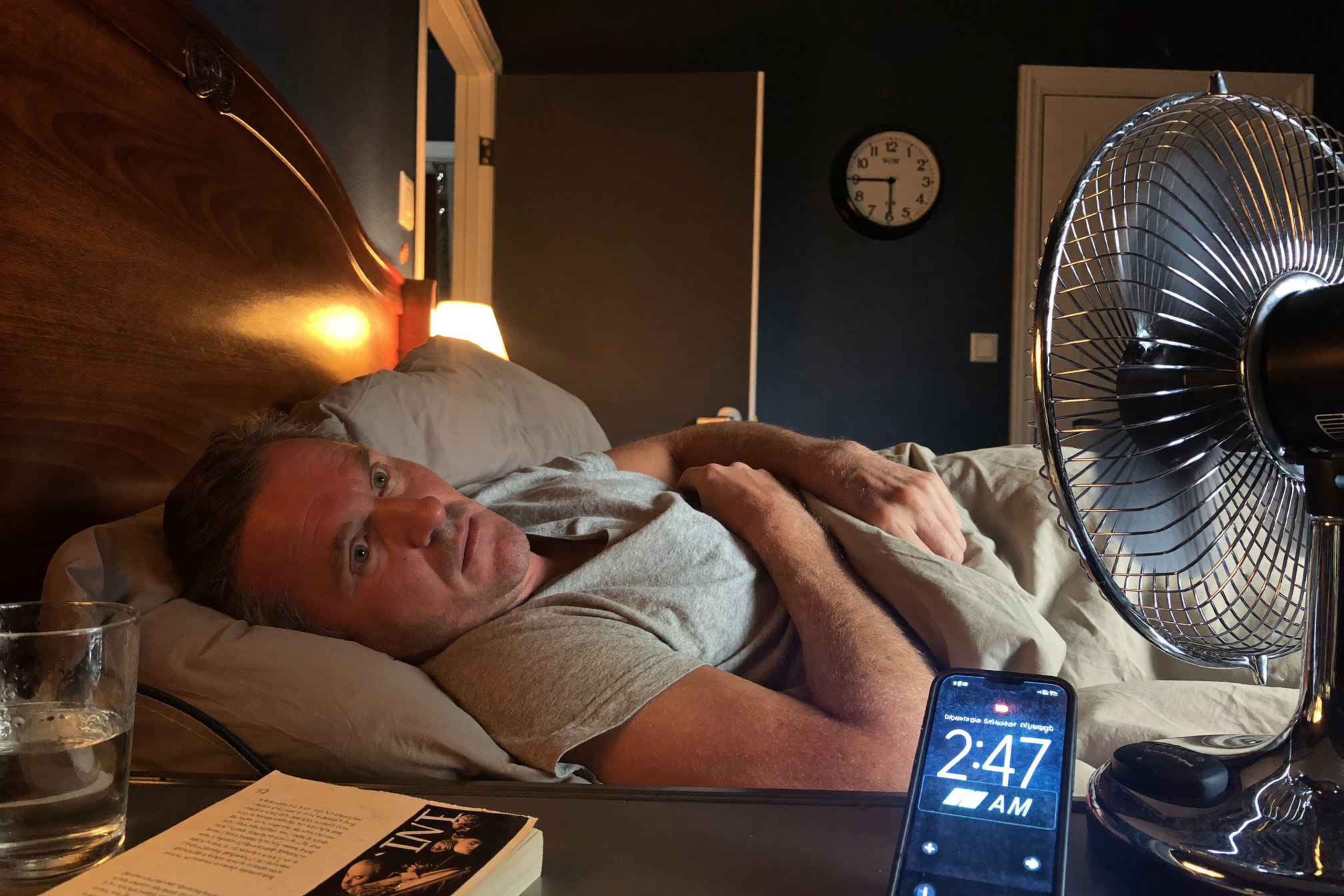
Masking works for a few weeks. Then the brain adapts and the ringing comes back louder.
Here's the pattern almost every long-term sufferer has lived through: the fan on maximum works for a few weeks. Then it doesn't. So you make it louder. That works for a few more weeks. Then it doesn't. White noise apps buy you the same short window. Sleeping pills knock you out until 3 AM — then you wake up and the ringing is louder because sedative sleep suppresses the natural GABA rhythm that keeps the gate closed at night.
Masking is coping, not treatment. Nothing that covers the ringing is going to fix what's actually happening underneath.
If any of the above describes what you've been through, the fix is in Reason 6.
See how Silencia works →Reason 05
Most tinnitus supplements are aimed at the wrong organ.
If you've tried Cortexi, Quietum, Lipo-Flavonoid, or generic "hearing health" formulas and gotten nothing lasting, this is why.

Most tinnitus formulas were designed for the ear that isn't the problem.
Cortexi is a 40% alcohol tincture. The alcohol evaporates every time you open the bottle, so the potency drifts down over the course of the month. And the herbs inside are dosed at 5 to 10 mg — when the clinical trials showing benefit for those same compounds use 200 to 600 mg of a single active. It couldn't have worked.
Quietum is a capsule blend that loses roughly 85% of its bioavailability to stomach acid before absorption. You paid for 100 mg. Your bloodstream got 15. And even at full absorption, the formula is designed for age-related hearing decline, not for salience-network support.
Lipo-Flavonoid ran a randomized placebo-controlled trial in 2020. The result was no significant benefit over placebo.
None of them target the salience network because most tinnitus-supplement formulators don't know that's where chronic tinnitus lives. They were designed for the ear that isn't the problem.
Curious what a formula built for the actual mechanism looks like?
See the Silencia formula →Reason 06
The nervous system needs specific nutrients — delivered where they can reach it.
Seven compounds support the biochemistry the salience gate uses to stay closed. Each has direct clinical research behind it:
Magnesium glycinate (300 mg) — the most bioavailable form. Directly supports GABA receptor sensitivity. A 155-person randomized trial in Sleep Medicine (2024) showed measurable Insomnia Severity Index improvement in four weeks at this dose.
L-Theanine (200 mg) — triggers GABA release and shortens sleep-onset latency within 30 to 40 minutes. Nine RCTs, 270 subjects.
GABA (500 mg) — the neurotransmitter that literally runs sensory gating. Improves sleep-quality parameters when paired with L-theanine.
Ashwagandha KSM-66 (300 mg) — the specific extract with an 80-person RCT behind it. 27.9% cortisol reduction, 35% faster sleep onset. Not generic ashwagandha. The specific one.
Methylcobalamin B12 (500 mcg) — Shemesh et al. found 47% of noise-induced tinnitus sufferers were B12-deficient vs. 19% of controls.
Vitamin B6 as P-5-P (10 mg) — the cofactor for the enzyme that manufactures GABA. In the active form so no conversion is needed.
Melatonin (0.3 mg) — the physiological dose. Not the 3-5 mg drugstore version that causes morning grogginess. Zhdanova's research showed 0.3 mg is what the body naturally produces at night.
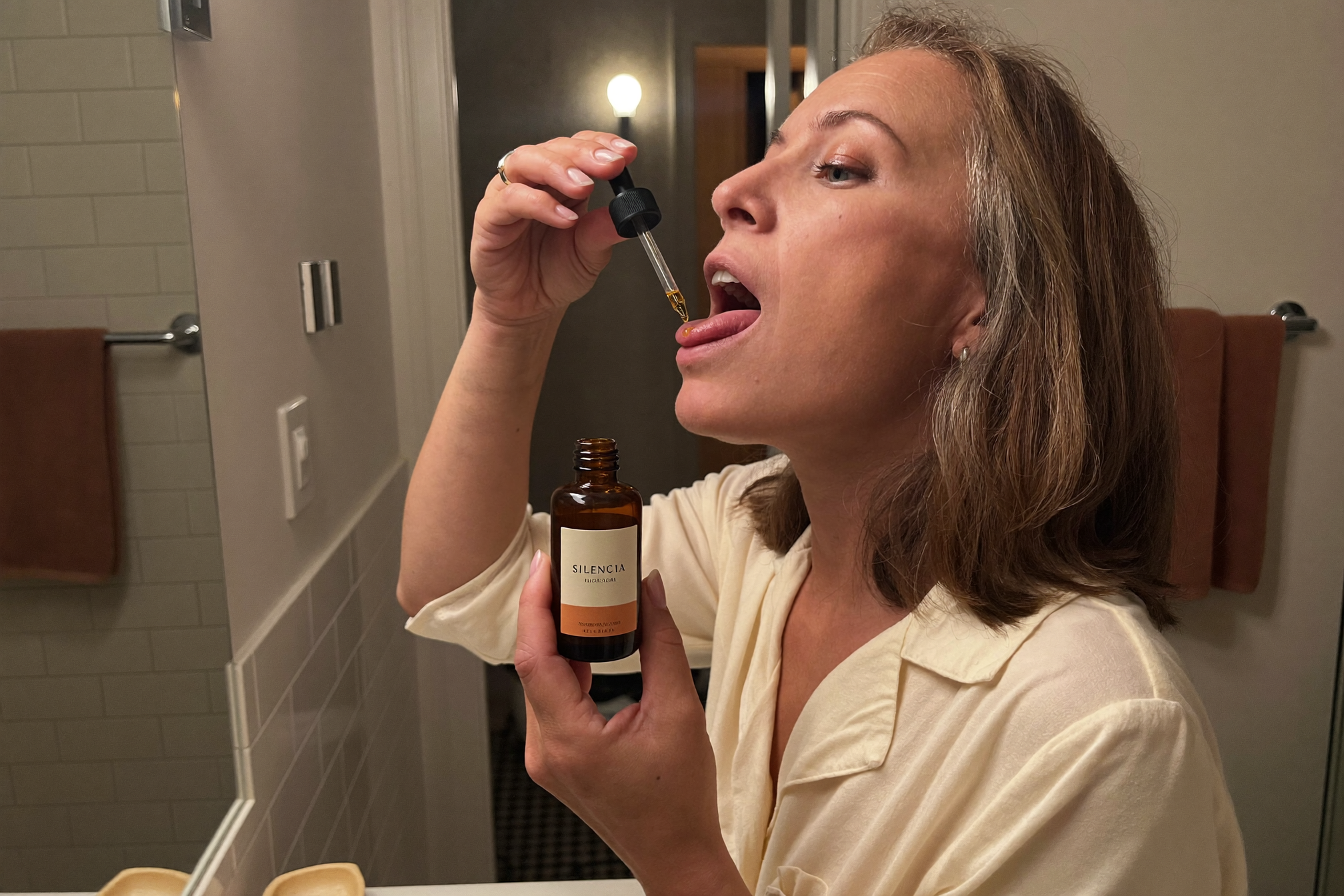
Two drops. Thirty seconds under the tongue. Direct into the bloodstream.
Delivery matters as much as dose. Capsules lose most of their potency to stomach acid. Alcohol tinctures lose potency to evaporation. Sublingual delivery — held under the tongue for 30 seconds — bypasses the stomach entirely. The nutrients cross into the bloodstream through the sublingual membrane and arrive at full potency, without alcohol carrying them.
Reason 07
Consistency is what actually rewires the pattern.
Here's the piece nobody in the supplement industry likes to admit: even the right formula only works if you actually take it every night. Most tinnitus sufferers cannot juggle four separate capsules, breathing exercises, tapping techniques, and a supplement schedule every single day. Consistency is where everyone falls off.
The salience network stabilizes on a timeline. Nights 1 to 7 usually feel like nothing — blood levels are still loading. Around night 8 to 10, most people notice the first quieter night: they wake up in the morning and realize they slept through instead of waking at 2 AM. By week four, the ringing drops enough that people stop actively checking for it. By week six, many describe forgetting to listen for it for the first time in years.
But that timeline only unfolds if you stay consistent. Which is why the formula that actually solves this is the one designed to make consistency effortless.
Ready to see what happens after night 8?
Try Silencia — 60 days money-back →What actually addresses the mechanism
About a year ago I started telling patients about a small dropper bottle called Silencia. It's alcohol-free, sublingual, and formulated around the exact seven nutrients above at the doses the research points to. Two drops under the tongue before bed. Thirty seconds. Direct into the bloodstream. No capsules to swallow, no alcohol carrying the actives, no stomach acid to fight.
The reason I recommend it — and I'm careful about which formulations I put my name behind — is that it removes the consistency problem. You don't have to juggle four supplements plus a routine. One dropper, twice a day. That's it. The habit is small enough to hold for the sixty nights the salience network needs to stabilize.

Most patients notice the first quieter night around night 8-10.
"I forgot to listen for it this morning." — a patient of mine, three weeks in. Six years of tinnitus. First time she forgot to check.
That's when you know the filter is closing again.
The guarantee
Silencia comes with a 60-day money-back guarantee. If it doesn't work for you, they refund you inside three business days. No fight. No 50%-off retention offer. No returned bottle required — you keep it either way.
I would not put my name on a recommendation that made you fight for your money back.
Try Silencia — 60-day money-back, keep the bottle
Get Silencia now →You are not going crazy. The ringing is real. The mechanism has a name. And nobody at your doctor's office is going to explain any of this to you, because it lives outside the scope of the specialty that owns your appointment. I'm writing this because after three decades, I owe those patients an explanation I could never give them in the exam room. If you're struggling with it today — reach out to someone who understands. Community matters as much as biology. You're not alone in the ringing.